
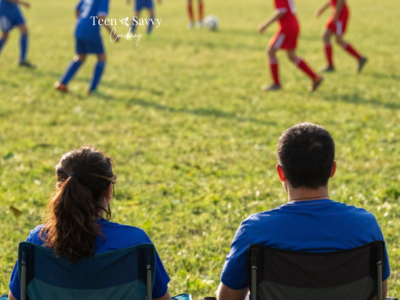
If you've spent any time at a youth sporting event lately, you've probably noticed something.
The kids are playing.
The parents are competing.
In this week's episode of Parenting Shrink Wrapped, Melissa and I sat down with communication expert, author, and former collegiate athlete Betsy Butterick to explore how youth sports have changed and what parents can do to help bring the focus back where it belongs.
Youth Sports Have Changed
Today's athletes are growing up in a very different world than previous generations.
Many children feel pressure to specialize in one sport at an increasingly younger age. Parents spend weekends traveling to tournaments. Social media highlights every accomplishment. Recruiting videos are posted before kids even reach high school.
For some families, sports begin to feel less like play and more like a full-time job.
Betsy shared how the financial investment, recruiting culture, and constant pressure to perform are changing the experience for everyone involved.
The Goal Should be Building Resilience
A reminder from our conversation is that parents don't need to remove every obstacle from their child's path.
Instead, we should help our kids develop the skills to navigate challenges themselves.
Confidence doesn't come from never struggling.
Confidence comes from overcoming struggles.
Whether that's learning to communicate with a coach, working through disappointment after a tough game, or figuring out how to recover from mistakes, these moments build resilience that extends far beyond sports.
Connection Before Correction
Betsy also shared one of my favorite ideas from the episode.
Today's kids don't simply want feedback.
They want connection first.
Whether you're a parent, coach, teacher, or mentor, relationships create the foundation for growth.
When children know we believe in them, they're far more willing to hear guidance, accept coaching, and develop new skills.
Ask More. Tell Less.
One practical piece of advice that applies far beyond sports is this:
Ask more questions.
Tell fewer answers.
Instead of immediately correcting, try getting curious.
Help your child reflect on their own experiences, identify solutions, and build confidence in their ability to solve problems.
Those conversations develop ownership, independence, and emotional maturity.
Bringing Joy Back to the Game
Sports teach teamwork.
They teach resilience.
They teach communication.
They teach perseverance.
But only when we allow them to.
As parents, our greatest role isn't creating the perfect athletic experience.
It's creating the kind of relationship where our children know they're loved regardless of the scoreboard.
Because years from now, they probably won't remember the final score.
But they'll remember how it felt to have us cheering them on.
P.S. Here’s a link to a love note I wrote to all of you Travel Sports Parents out there. I see you. I am you.